

One of the most frequent dialogues I hear during consulting sessions with senior executives is: "We have the best product in the market, we've spent a solid advertising budget, we have a team, but our online sales system is stalled and we aren't growing."
After years of experience in this market, my answer is always the same: Your problem is not product quality or a lack of budget; the problem is the lack of a "growth architecture" and a siloed view of your business. Simply put, you don't know when to do what, where to spend the budget, or the correct order of operations. You are, in a way, shooting in the dark.
Since the late 1990s when I entered the internet space, up to today as I develop brand strategies, I have repeatedly seen how powerful traditional businesses have kneeled before smaller but more agile competitors simply because they lacked a system aligned with the digital space. This is where hiring a business coach evolves from a luxury into a strategic necessity for survival.
In short:
- Business coaching is fundamentally different from life coaching or motivational talk; it focuses on numbers, systems and process.
- There are 5 common signs that now is exactly the time you need a business coach, not later.
- A good business coach starts by diagnosing your bottleneck precisely, not by selling a ready-made solution.
- There are concrete criteria for choosing well, which you can check today.
What Business Coaching Is (and Is NOT): Ending the Motivational Illusion
The biggest blow to the management consulting industry is confusing business coaching with motivational speaking or life coaching. We are not going to sit across from each other in business development sessions and talk about the "law of attraction" or "positive energy"! Business coaching is a strictly analytical and results-oriented science. It focuses precisely on numbers, Return on Investment (ROI), systemizing online processes, identifying financial bottlenecks, and optimizing the sales funnel. A professional business coach dissects your business like a surgeon, stops the financial bleeding, and provides an operational roadmap to pull you out of the crisis.
To draw the line between roles clearly:
- Business coach: Works on the whole business system (strategy, team, process, budget); usually a medium- to long-term engagement.
- Digital marketing consultant: Focuses on one specific area (for example SEO or advertising). If you're unsure which you need, read this article on the difference between a specialist, a manager and a consultant.
- In-house execution team: Does the daily work, but strategy and aligning the different functions usually isn't part of their job.
5 Signs the Time Is Now
These are the most common signals I see in sessions with senior executives. If even two of them feel familiar, it's probably time to take this seriously.
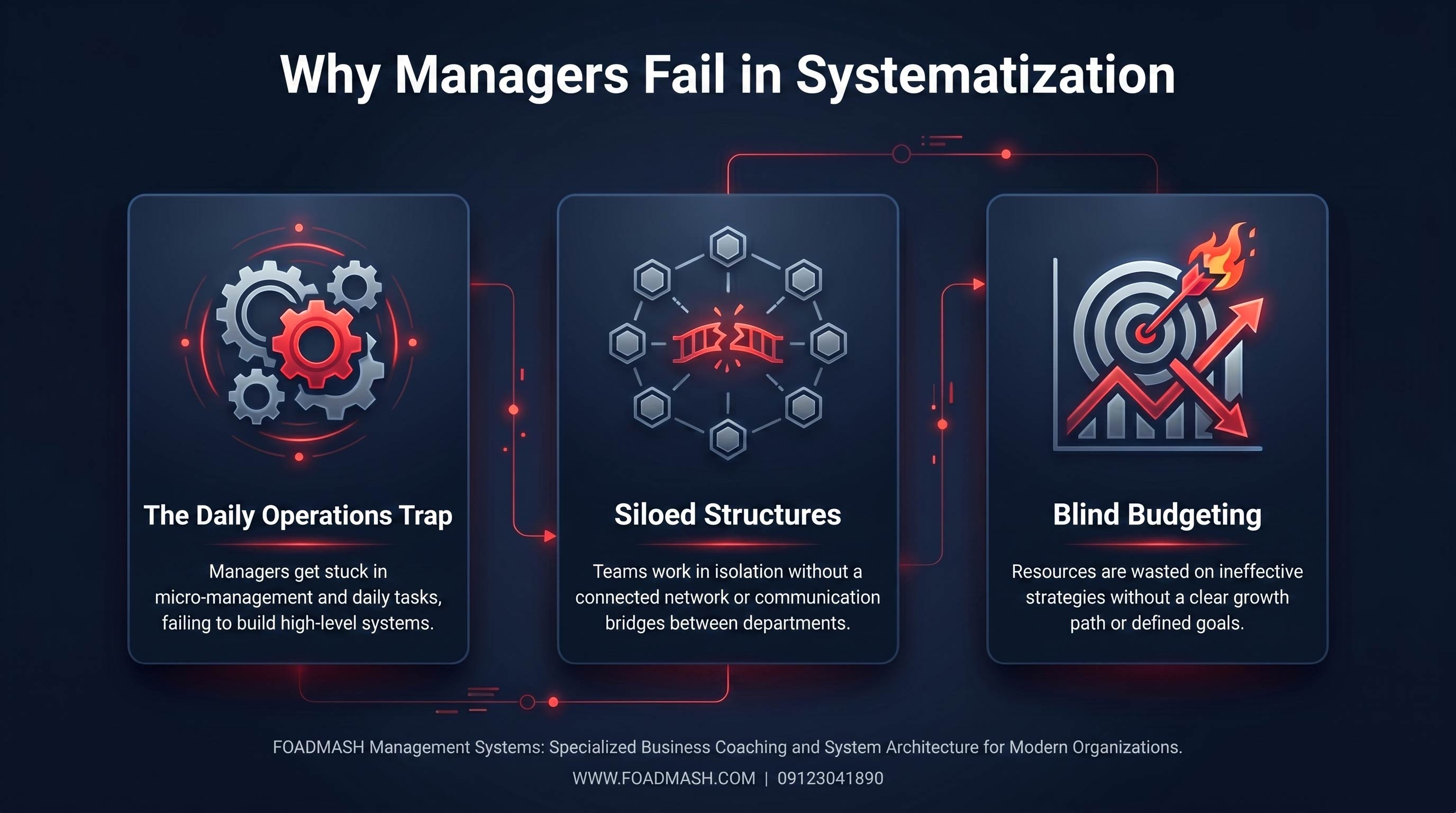
1. The Daily Operations Trap (Micromanagement)
Many executives have unintentionally become the senior employees of their own businesses. A manager drowning in executive tasks, approving Instagram posts, or constantly checking on the digital marketing department loses the opportunity to see the bigger picture and formulate macro-strategies. A business coach helps you step out of the system so you can guide it as an observer and leader. In other words, a CEO should not be entangled in the micro-details of the organization, but should instead be focused on macro-level issues.
2. Siloed Structures and the Lack of Cohesive Team Building
Having a few scattered employees (an SEO specialist, a social media admin, and a designer) does not mean you have a "digital marketing team." These individuals usually don't speak each other's language and lack synergy. One of the main tasks of a business coach is to connect these isolated islands and turn them into an integrated wealth-creation machine. You need a system that operates at maximum efficiency even in your absence. Now, imagine throwing a web design and programming team into the mix—then it's a complete circus!
3. Burning Budgets in Advertising (Advertising Without Infrastructure)
Running expensive advertising campaigns without the proper infrastructure for support, lead generation, and conversion is exactly like throwing your capital away. Before allowing you to spend any money, a business coach first standardizes the customer journey from entry to purchase to minimize the bounce rate.
For example, if you run a digital campaign without collecting and analyzing data, you have essentially thrown all your money away; the exact same rule applies to the non-digital space. Suppose you participate in a trade show; if you collect no data from the visitors—or rather, if you don't collect the data you should have—that exhibition has practically zero ROI. By "data you should have," I mean, for instance, writing down a name and phone number but completely missing the person's job title or company name. What use is that? Or perhaps you didn't save it online and left it on a piece of paper that just had a glass of tea spilled all over it. This is exactly where a business coach comes to the rescue.
4. Deciding by Gut Feeling, Not Data
"I feel that campaign worked well" is a sentence I've heard in many meetings, with no number behind it. When you don't track conversion rate, customer acquisition cost (CAC) or customer lifetime value (LTV), you're effectively making large spending decisions on luck. A business coach helps you define these numbers, measure them, and use them in real decisions.
5. Growth Has Stalled Despite Heavy Effort
This may be the most painful sign: your team works harder every day, the budget has increased, yet your sales number sits where it was six months ago. This usually means the problem isn't "effort," it's the "direction" of the effort, and this is exactly where an outside, objective view proves its worth.
If you want to find out right now, free and with no signup, which of these is holding your business back, you can get a first read in 2 minutes with the Growth Bottleneck Diagnostic.
How Does a Real Engagement with a Business Coach Begin?
Contrary to popular belief, a professional business coach doesn't start by offering a ready-made solution. The process usually has these stages:
- Diagnosis: Reviewing the current team, processes, customer acquisition channels and available data, before any recommendation.
- Prioritization: Determining which bottleneck (digital infrastructure, conversion, or team leadership) has the biggest impact on growth.
- Roadmap: Defining an operational plan with concrete steps, not a general, motivational suggestion.
- Support in execution: Being present alongside the team during execution, not just handing over a slide deck.
How to Choose the Right Business Coach
Before starting any engagement, run through this checklist:
- Do they have real, demonstrable experience in your industry, or only theoretical knowledge?
- Does the first meeting begin with questions and analysis, or does it go straight to selling a proposed package?
- Do they focus on numbers and measurable results, or is their talk general and motivational?
- Do they offer an initial analysis for your business, not for a generic hypothetical one?
Frequently Asked Questions
What's the difference between a business coach and a digital marketing consultant?
A business coach works on the whole business system (strategy, team, process, budget), while a digital marketing consultant usually focuses on one specific area such as SEO or advertising. For a fuller explanation, see this article.
Is business coaching worthwhile for small businesses?
Yes, as long as the scope of the engagement matches the size of the business. Often a small business's main problem is lack of direction, not lack of budget, which is why coaching can pay for itself sooner than expected.
How long does business coaching take to show results?
Depending on the size of the bottleneck, the first tangible results (like clearer priorities and stopping wasted spend) usually appear within the first few weeks, but structural, lasting results take several months.
Does the coach need experience in my exact industry?
Industry experience helps but isn't an absolute requirement. What really matters is command of digital growth principles and the ability to diagnose bottlenecks correctly, which is what the checklist above covers.
The Bottom Line: Change Course Before Hitting the Rocks
Today's ruthless market leaves no room for trial and error. Smart managers know that to break through their current revenue ceiling and scale their business, they need an expert, objective, and strategic perspective from outside the organization. If you feel the gears of your company are not syncing and your team's output does not justify the costs, it is time to discard outdated strategies and re-engineer your brand's system.